
Listicle
What Affordable NDIS Provider Software Actually Means in Australia
Affordable NDIS provider software isn't about the lowest ad price. Here's how to compare real costs, including Sparks Provider's flat $499 a year.

Kim MatthewsFounder and disability support provider
When people search for affordable NDIS provider software in Australia, they usually mean one thing: a system that does the job without punishing them for growing their team. The honest answer is that affordability isn't the number on the ad, it's the number you actually pay once your roster grows past three or four workers. Sparks Provider costs $499 a year including GST, for unlimited staff and unlimited clients, with Xero integration included. That's the whole subscription cost, per business, not per person.
If you're comparing options right now, here's what actually determines whether software is affordable for a small provider, not just cheap on the surface.
1. Check whether the price is per business or per seat
Per-seat pricing looks fine when you have two support workers. It stops looking fine when you hire your fifth, tenth or twentieth. Ask directly: does the price change if my roster grows? With Sparks Provider it doesn't. One flat $499 a year covers unlimited staff and unlimited clients, whether you run five shifts a week or five hundred.
2. Add up what's actually included
- Does the price include payroll integration, or is that a separate add-on?
- Are shift notes, incident reports and service agreements part of the core plan?
- Is there a limit on document storage or participant records?
- Does the claim file for NDIA-managed work come standard, or cost extra?
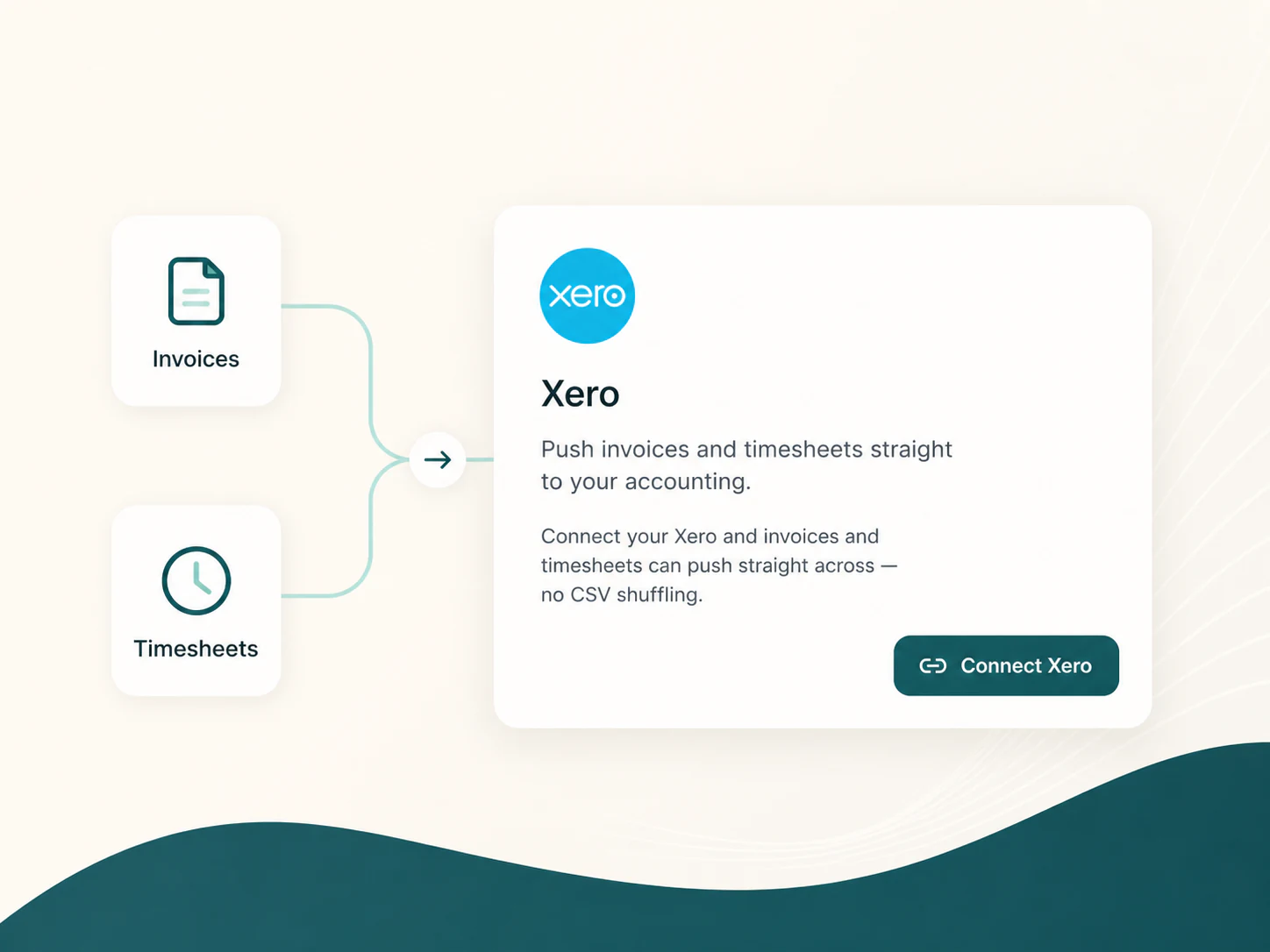
Sparks Provider keeps the roster, staff, participants, shift records, approved hours, invoices and business records together in one plan, with Xero integration included. Approved timesheets go to Xero payroll as drafts for checking. It doesn't calculate wages or interpret awards, that's still a job for your bookkeeper or Xero itself, but the handoff is built in rather than sold separately.
3. Work out what happens when your team grows
A provider with three workers today might have twelve next year. If your software charges per active user, your annual cost could double or triple without you changing how you work. Run the numbers now for where you expect to be in twelve months, not just where you are today. If a flat yearly fee stays flat no matter how many workers you invite, that's the real test of affordability.
4. Ask what switching from your current system actually costs
The cheapest software on paper isn't affordable if moving your participant history, staff invitations and years of shift notes takes weeks of manual re-entry. Sparks Provider has a built-in ShiftCare import that brings across participants, staff invitations, and up to seven years of shift history and progress notes. Re-importing the same file doesn't duplicate people, so you can test it without risk during the trial.
5. Try before you commit, without a card on file
Free trials that ask for a card upfront aren't really free, they're a countdown to an automatic charge. Sparks Provider offers a 7-day free trial with no card needed, so you can test the roster, price book and invoicing flow with your own data before deciding anything.
A note on where this comparison comes from
We build Sparks Provider, so we're not a neutral third party here, and we won't pretend otherwise. If you want a side by side look at how Sparks Provider stacks up against ShiftCare on features and pricing structure, that comparison is at sparksprovider.app/compare/shiftcare. If you'd rather just see what a year would cost for your specific team size, use the calculator at sparksprovider.app/calculator.
Affordable software isn't the one with the smallest number on the landing page. It's the one whose price doesn't move when your business does.
- Check whether the price is per business or per seat
- Add up what's actually included
- Work out what happens when your team grows
- Ask what switching from your current system actually costs
- Try before you commit, without a card on file
Common questions
The details people ask next.
Is Sparks Provider really $499 for the whole year, no matter how many staff I have?
Yes. The $499 per year, including GST, covers unlimited staff and unlimited clients for the business. It's a flat per-business price, not a per-person fee.
Do I need a credit card to try it?
No. The 7-day free trial doesn't require a card.
Can I bring across my existing participant and shift data?
If you're moving from ShiftCare, there's a built-in import that brings across participants, staff invitations, and up to seven years of shift history and progress notes. Re-importing the same file won't create duplicates.
Does the subscription cost include payroll?
It includes Xero integration. Approved timesheets can be sent to Xero payroll as drafts for checking, but Sparks Provider doesn't calculate wages, interpret awards or run payroll itself.
Will the price increase if I add more support workers next year?
No. The $499 annual price stays the same regardless of how many staff or clients you add.
This article is general information only and is not financial, NDIS or compliance advice. NDIS pricing and claiming requirements can change, so check the current NDIA pricing arrangements and provider guidance before relying on it.